
SYSTEM overview
Dermalune is designed as a medical-grade photobiomodulation system built around controlled light delivery and predefined operational structure. Rather than existing as a standalone consumer device intended for isolated use, the system is structured to function as a form of advanced aftercare support within broader treatment pathways.
While traditional topical aftercare primarily acts at the surface level, supporting barrier function, hydration, and superficial recovery, photobiomodulation operates through different biological mechanisms. Controlled light exposure can engage cellular processes involved in energy metabolism and signalling pathways that are also targeted during in-clinic procedures, allowing post-treatment support to extend beyond surface-level intervention.
Photobiomodulation is already widely applied within clinical environments as an adjunct to professional treatments, where controlled light exposure is used to support recovery, reduce treatment stress, and reinforce regenerative processes. In many cases, however, this exposure remains limited to isolated in-clinic sessions.
Biological responses to light are cumulative and time-dependent. Cellular processes influenced by photobiomodulation unfold over days rather than minutes, meaning that a single exposure can initiate a response, but continuity is required to support and sustain it. Without structured follow-up, the biological effects initiated in-clinic often lack reinforcement during the critical post-treatment phase.
Dermalune was developed to address this gap between scientific understanding, clinical practice, and real-world use. By enabling controlled, repeatable light exposure beyond the treatment room, the system extends the functional role of photobiomodulation from an isolated clinical adjunct to a continuous form of post-treatment biological support.
The system is developed to support biological continuity beyond isolated use, operating independently while achieving optimal alignment with professional treatment pathways. All system elements are designed to function within clearly defined parameters, with adjustability embedded at the system level to enable functional flexibility while maintaining predictable system behaviour across sessions.
SYSTEM DESIGN
Core System Capabilities
Dermalune is designed as a configurable photobiomodulation system that combines multiple functional elements within a single, controlled platform. Rather than offering isolated features, the system integrates wavelength selection, output modulation, intensity control, and session timing into one coherent structure.
The system incorporates multiple clinically relevant wavelengths across the visible and near-infrared spectrum, supports different operational configurations, and allows controlled adjustment of intensity and delivery mode. All functions are managed through a central control unit, ensuring that system behaviour remains predictable and repeatable across sessions.
Within this architecture, Dermalune supports two primary system configurations, multiple intensity levels, and both continuous and pulsed light delivery modes. These elements are designed to work together within predefined boundaries, enabling flexibility without introducing unnecessary complexity or open-ended configuration.
This architectural approach allows Dermalune to address a broad range of aesthetic use contexts while maintaining a clear, structured system logic.
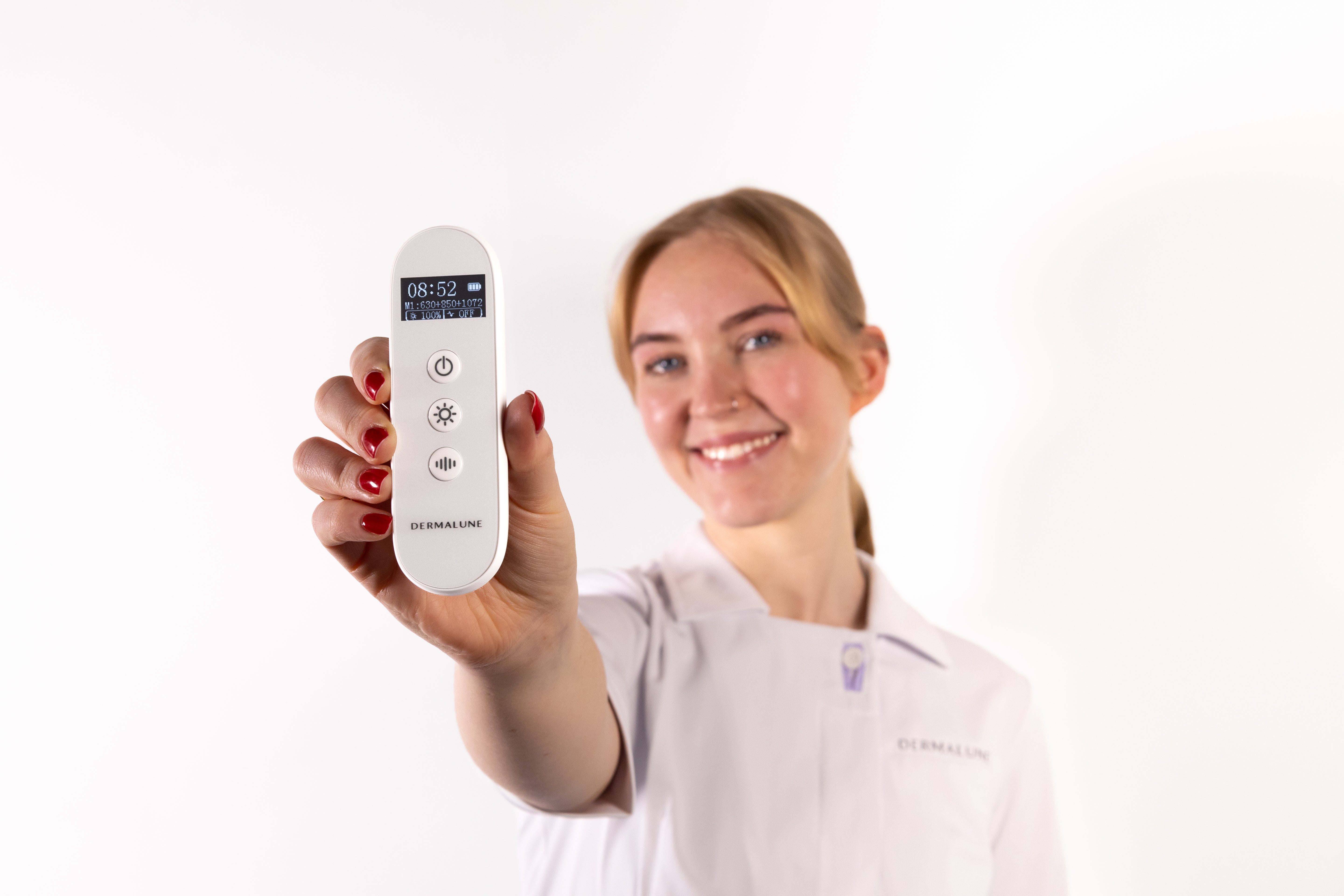
System Architecture
Configurable by Design
Dermalune is designed as a configurable photobiomodulation system in which functional options are intentionally structured rather than freely combined. Modularity within the system refers to how light delivery configurations, output levels, and delivery modes are organised and accessed, not to interchangeable or user-defined hardware components.
The system operates with predefined configurations that combine specific wavelength sets with calibrated output profiles. These configurations form the foundation of system use and determine how light is delivered during a session. Within each configuration, users can further adjust system behaviour through selectable intensity levels and delivery modes.
Configurability is therefore layered:
- System configuration defines the functional scope of light delivery
- Intensity levels allow controlled adjustment of output within each configuration
- Delivery mode selection enables either continuous or pulsed light delivery
All selectable options are integrated into the same control architecture and managed through a single interface. This prevents the need for manual calibration, parameter tuning, or technical interpretation by the user.
Rather than offering unrestricted combinations, Dermalune limits configurability to predefined, system-level options. This design approach ensures that flexibility is available where functionally relevant, while overall system behaviour remains consistent, predictable, and repeatable across sessions.
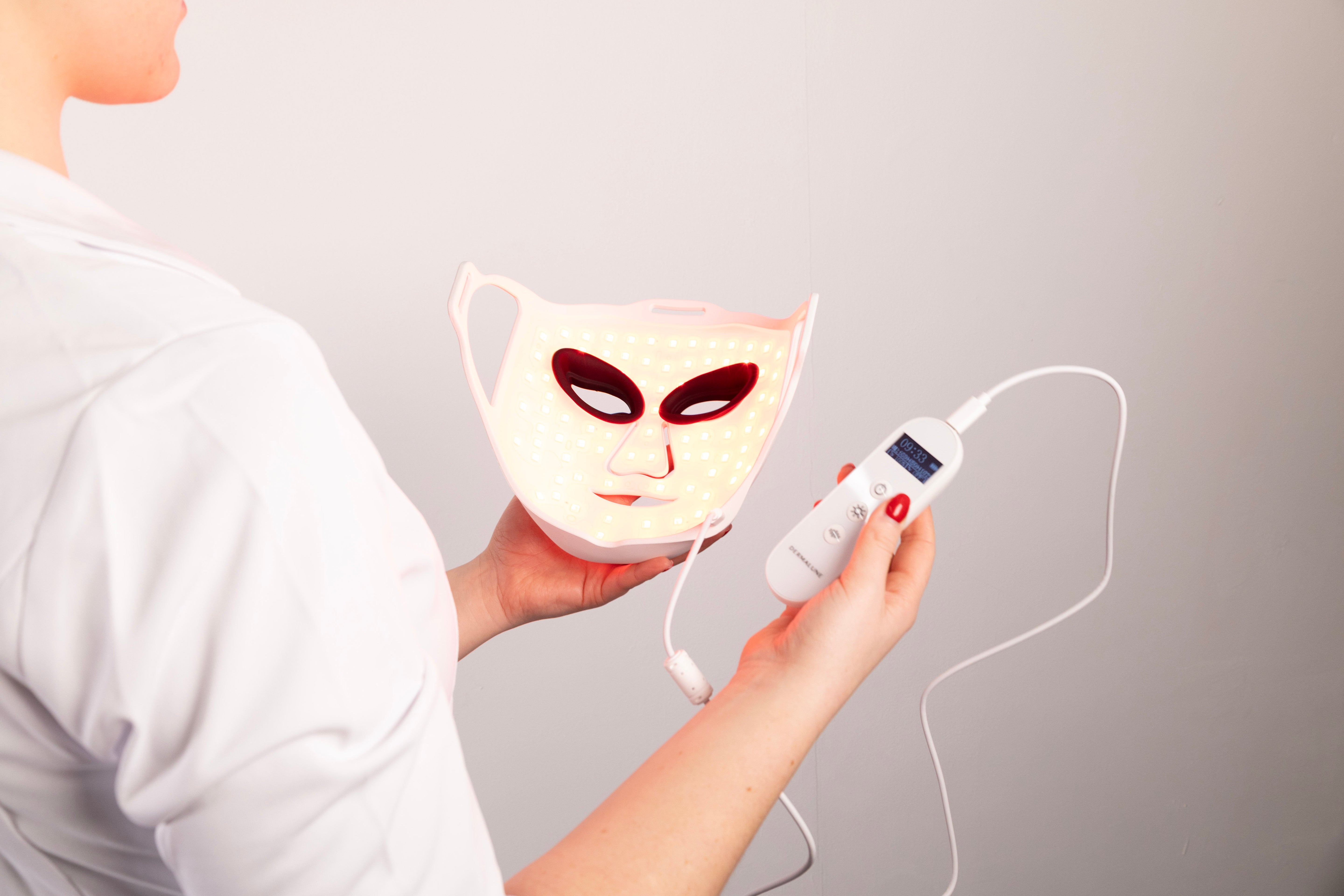
CONFIGURATIONS & FUNCTIONAL SCOPE
Targeted System Configurations
Dermalune operates with two predefined system configurations: Regenera and Clarify, each designed to address a distinct functional scope within aesthetic skin care. These configurations were deliberately selected to cover the full spectrum of commonly addressed skin concerns in professional aesthetics, without introducing unnecessary complexity or open-ended protocol design.
Regenera is configured for skin rejuvenation and age-related concerns, including skin texture, fine lines, and overall skin quality. This configuration combines red light with near-infrared and deep near-infrared wavelengths, creating a light profile aligned with regenerative and rejuvenation-oriented use contexts.
Clarify is configured for skin concerns related to congestion, impurities, and acne-prone conditions. This configuration integrates blue light in combination with near-infrared and deep near-infrared wavelengths, forming a controlled light profile suited for clarifying-focused use contexts.
Within each configuration, Dermalune allows further adjustment through selectable intensity levels and delivery modes. The system offers three calibrated intensity levels, enabling controlled variation in output, as well as two delivery modes: continuous and pulsed, to accommodate different usage preferences and application contexts.
Users are able to select between options without manually combining wavelengths or defining custom protocols, ensuring that system behaviour remains structured, predictable, and consistent across sessions.
The structure and configuration of the system are informed by specific photobiomodulation principles that determine how light interacts with biological tissue.
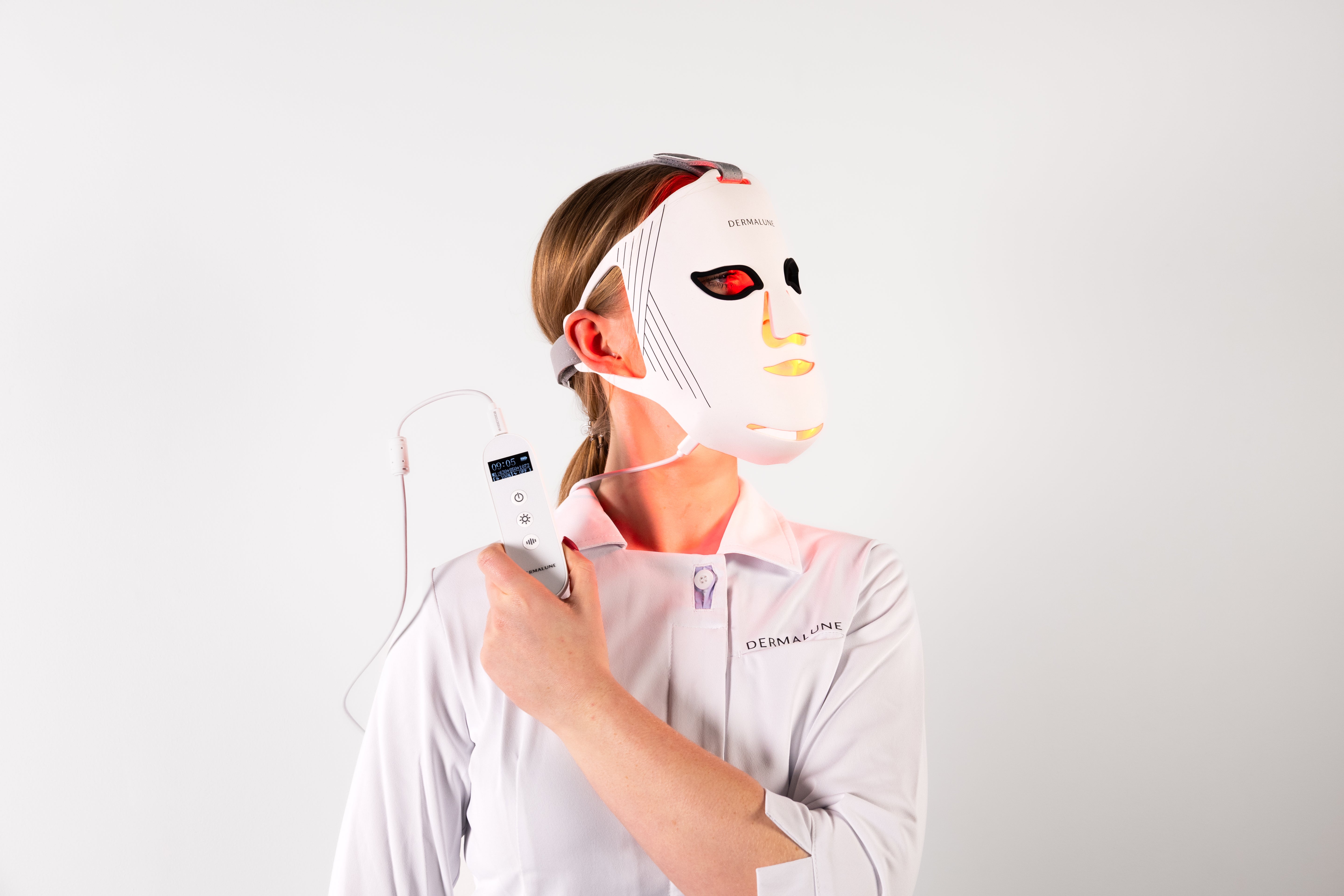
SESSION STRUCTURE & SYSTEM BOUNDARIES
Controlled by Design
The system incorporates a fixed session duration and built-in timing mechanisms, preventing open-ended use or uncontrolled exposure. All selectable configurations, intensity levels, and delivery modes function within calibrated limits defined by the system architecture.
Dermalune does not allow unrestricted parameter adjustment, user-defined protocols, or manual calibration. By intentionally limiting configuration freedom, the system avoids variability caused by interpretation or experimentation, while still allowing functional flexibility through predefined options.
These design boundaries ensure that system behaviour remains predictable, repeatable, and stable over time, supporting consistent use without requiring technical oversight or ongoing adjustment by the user.
This approach allows the system to integrate naturally into established professional practices without altering existing treatment philosophies.