
Scientific Foundation
Dermalune is developed on established principles of photobiomodulation and regenerative biology.
The system is designed to support biological processes involved in skin recovery and regeneration through controlled, repeatable light-based stimulation. Rather than introducing new treatment modalities, Dermalune focuses on sustaining and stabilising the biological pathways already activated by professional aesthetic procedures.
This scientific framework forms the foundation of the Dermalune Clinical PBM System and guides its technical design, parameter selection, and intended professional use.

BIOLOGICAL CONTINUITY
Why regeneration does not stop after the clinic
In-clinic aesthetic treatments initiate a cascade of biological processes within the skin. Cellular repair, mitochondrial activation, inflammatory modulation, and tissue remodeling unfold over time, often extending well beyond the immediate post-treatment window. While the clinical intervention acts as the trigger, the regenerative response itself continues across days and weeks as part of the skin’s natural recovery cycle.
This temporal gap between clinical stimulation and biological completion is a critical aspect of regenerative outcomes. Without ongoing support, these processes gradually diminish as the initial stimulus fades, limiting the depth and durability of the result.
Continuity as a biological principle
Regeneration is not a single event, but a process dependent on consistency. At a cellular level, biological systems respond more effectively to repeated, controlled stimulation than to isolated exposure. Sustained activation supports cellular signaling pathways, energy metabolism, and tissue homeostasis, creating conditions in which repair mechanisms can proceed efficiently.
In regenerative biology, continuity plays a stabilizing role: maintaining favorable conditions rather than forcing accelerated change. This principle is well established across healing, recovery, and tissue adaptation processes.
Extending biological support beyond treatment sessions
From a clinical perspective, this highlights the importance of supporting the skin between in-clinic interventions. While professional treatments initiate regeneration, complementary biological support can help sustain the processes already underway, without introducing additional procedural stress or replacing the original modality.
This creates a framework in which light-based stimulation functions not as a standalone treatment, but as a supportive biological input, aligned with the skin’s natural recovery rhythm.
From biological continuity to system design
Understanding regeneration as a continuous process rather than a momentary response forms the basis for structured, repeatable support outside the clinic. Any system designed to operate within this framework must prioritize control, safety, and consistency, ensuring that biological activity is supported without disruption.
This concept of continuity underpins the development of clinical photobiomodulation systems intended to complement professional care, forming a bridge between in-clinic procedures and sustained biological recovery.
Photobiomodulation (PBM)
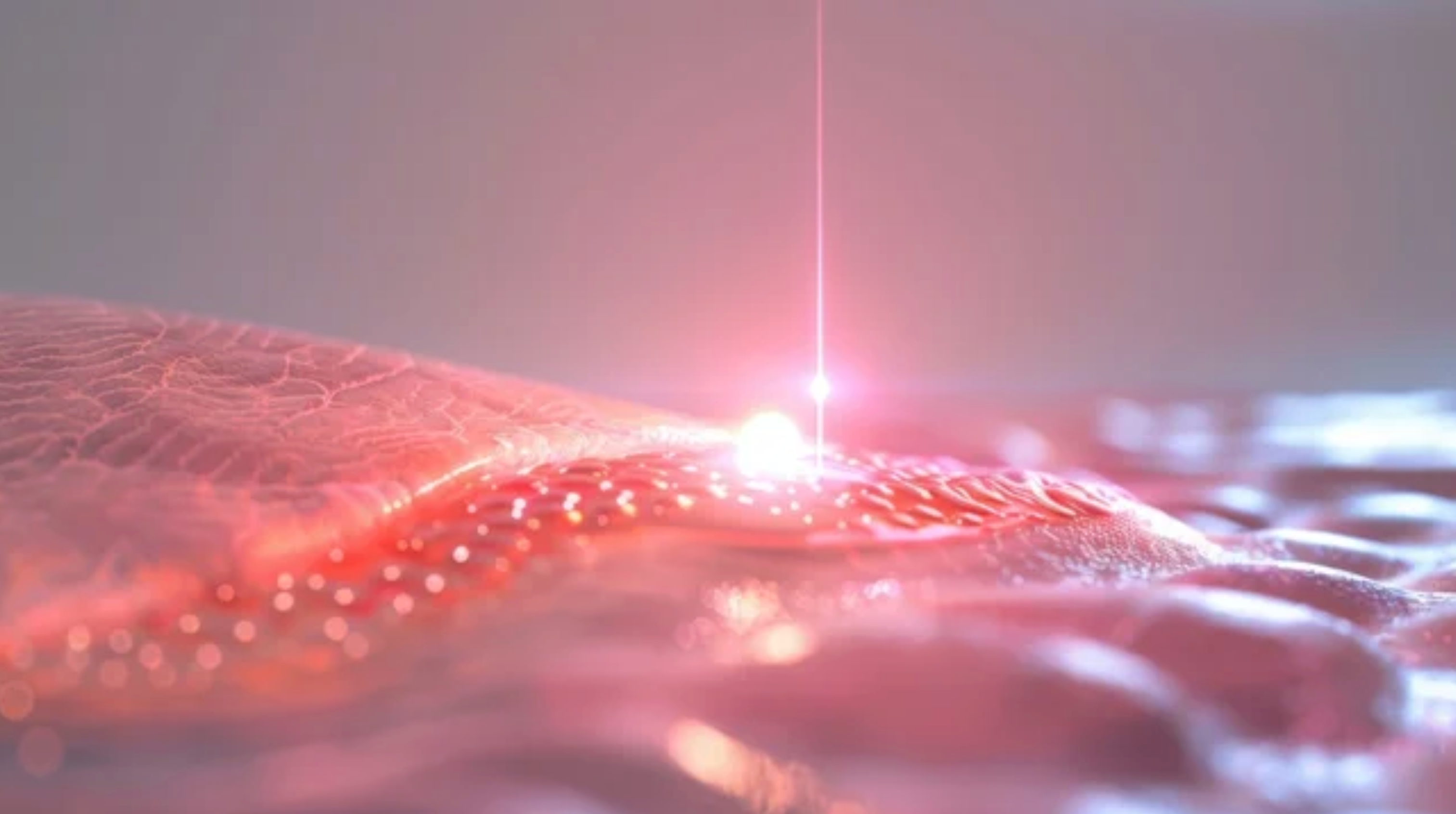
Photobiomodulation (PBM) refers to the therapeutic use of specific wavelengths of visible and near-infrared light to modulate cellular activity. When applied in controlled parameters, light energy is absorbed by intracellular chromophores, initiating biological responses without causing thermal damage.
Within dermatology and aesthetic medicine, PBM is primarily associated with supporting cellular metabolism, tissue recovery, and inflammatory balance. Rather than acting as an isolated treatment modality, PBM functions as a biological support mechanism that enhances the skin’s natural regenerative capacity.
The Dermalune Clinical PBM System is designed around these established PBM principles, focusing on repeatable, non-invasive light delivery intended to support biological processes already activated through professional in-clinic procedures.
BIOLOGICAL RESPONSE
Light–Tissue Interaction
Photobiomodulation involves the interaction of specific wavelengths of light with biological tissue. When light reaches the skin, photons are absorbed by intracellular chromophores, triggering a cascade of cellular responses.
These responses primarily influence mitochondrial activity, cellular metabolism, and signalling pathways associated with tissue repair and recovery. Rather than forcing change, PBM supports the body’s inherent regenerative processes by creating optimal conditions for biological function.
In a clinical context, this interaction allows light-based support to complement procedures that initiate regeneration, helping sustain and reinforce biological activity between and after treatments. The result is a controlled, non-invasive method of supporting tissue recovery aligned with established regenerative principles.
BIOLOGICAL PROCESSES
CELLULAR LEVEL
At a cellular level, photobiomodulation supports a range of biological processes associated with tissue recovery and homeostasis. Light absorption within cells influences mitochondrial activity, contributing to energy availability required for cellular repair and normal function.
In addition, PBM is associated with modulation of inflammatory responses and cellular signalling pathways involved in tissue stress and recovery. Rather than acting as a treatment in itself, light-based support functions as a regulatory input that helps maintain favourable biological conditions following professional procedures.
Within dermatology and aesthetic medicine, this cellular support aligns with regenerative workflows by assisting the body’s natural recovery mechanisms over time, without introducing additional physical or chemical intervention.
From Principle to Application
Clinical parameter control
Photobiomodulation is not defined by light alone, but by how light is delivered.
Biological responses depend on a precise combination of wavelength, intensity, exposure pattern, and treatment context.
While the underlying cellular mechanisms of PBM are well established, clinical outcomes vary significantly depending on how these parameters are configured. Insufficient energy delivery may fail to trigger a meaningful biological response, while excessive or poorly controlled output can reduce specificity or tolerance.
For PBM to function as a reliable regenerative support modality, light exposure must be controlled, repeatable, and aligned with the biological state of the tissue at each stage of recovery.
This distinction marks the transition from photobiomodulation as a general principle to photobiomodulation as a clinical system, where parameters are not generic, but intentionally selected to support specific therapeutic goals.
Dermalune is designed within this framework: translating established PBM biology into controlled, purpose-driven configurations suitable for professional aesthetic workflows.
System Configuration Logic
Dual photobiological profiles
Dermalune is structured around two distinct photobiological configurations, each developed to support a different biological objective within aesthetic care. This separation reflects the fact that not all skin processes respond optimally to the same type of light stimulation.
Rather than relying on a single, universal light profile, the system differentiates between configurations designed for regenerative processes and those intended for inflammatory and microbiological modulation. Each configuration integrates a specific combination of wavelengths, forming a complete biological profile aligned with its intended purpose.
Within these predefined profiles, clinical flexibility is achieved through controlled adjustment of delivery parameters such as intensity levels and wave modes. This allows light stimulation to be adapted to skin condition, treatment phase, and professional context, while the underlying biological profile remains consistent.
This configuration logic provides a structured foundation for targeted photobiomodulation, balancing biological specificity with practical adaptability.

Balanced multi-wavelength photobiology
Wavelength Architecture
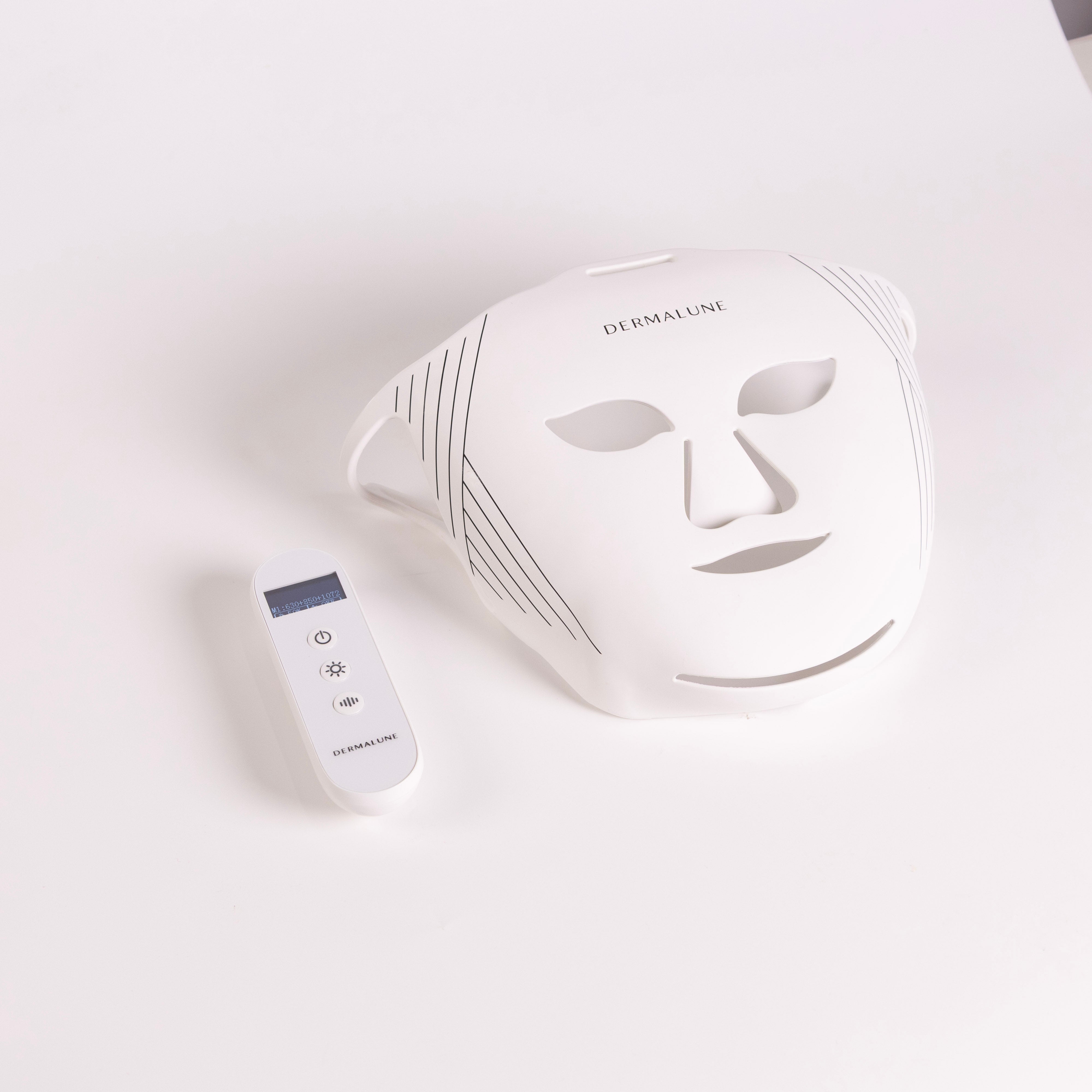
The Dermalune Clinical PBMT System is built around a multi-wavelength architecture incorporating visible, near-infrared, and deep near-infrared light. Each wavelength contributes a defined biological role, operating in parallel rather than in hierarchy.
Rather than relying on a single dominant wavelength, Dermalune delivers a structured combination of light that interacts with both superficial and deeper skin layers. This approach reflects the reality that regenerative, inflammatory, and regulatory processes occur simultaneously and require coordinated biological support.
Both Dermalune configurations share an infrared foundation that includes conventional near-infrared and deep near-infrared wavelengths. This ensures that cellular energy metabolism, immune modulation, and tissue recovery are supported regardless of the visible-spectrum pathway being engaged.
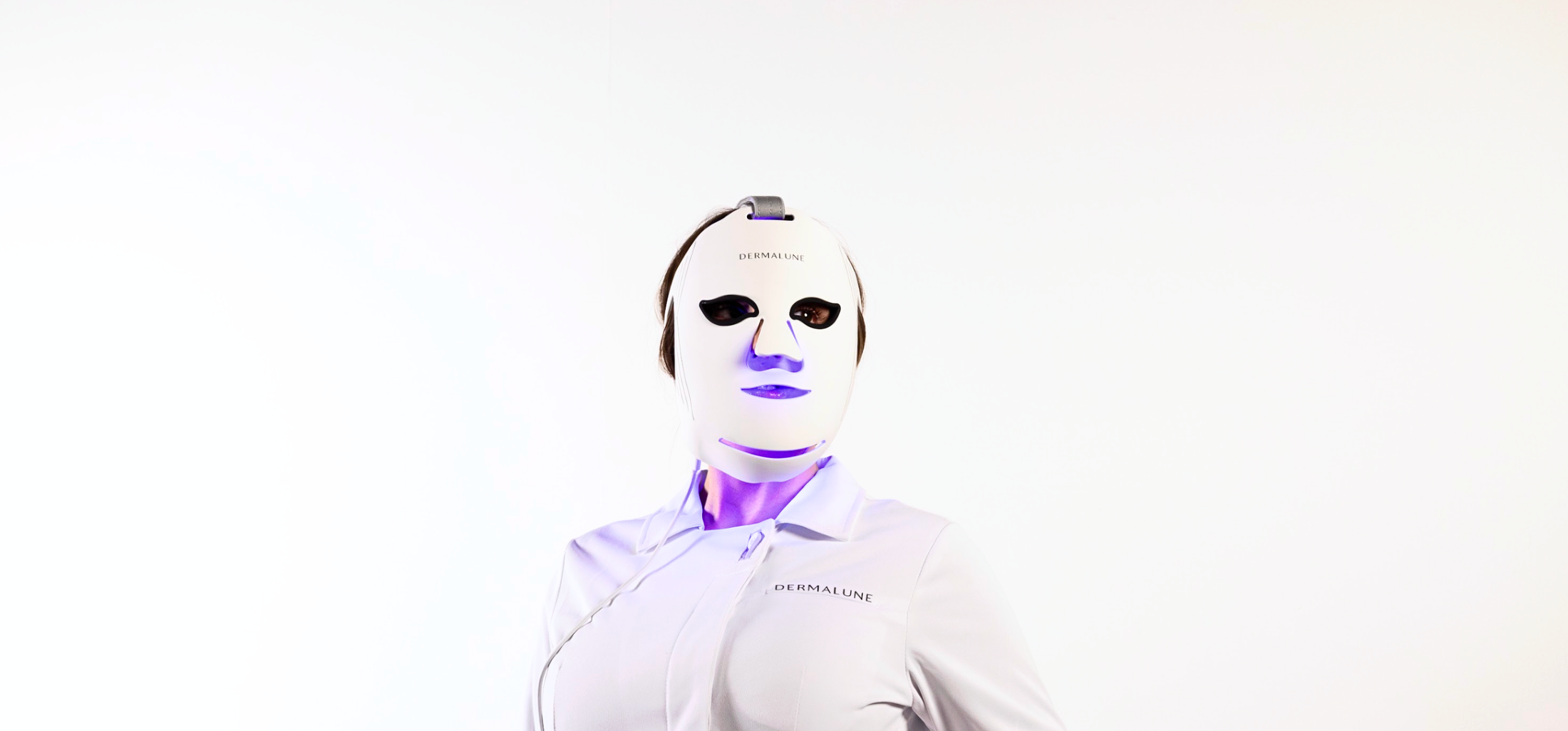
The distinction between configurations lies in the visible-spectrum wavelength used. In the Regenera configuration, visible red light directs stimulation toward pathways associated with collagen synthesis, fibroblast activity, and structural regeneration. In the Clarify configuration, visible blue light engages surface-level biological processes related to microbiological balance, sebaceous regulation, and inflammatory control.
In both cases, infrared and deep-infrared wavelengths operate alongside visible light to provide depth of interaction, biological stability, and continuity of response across skin layers. By maintaining this balanced delivery, Dermalune avoids isolated or one-dimensional photobiological stimulation, functioning instead as a coherent biological environment.
Light Delivery Control
Irradiance & Dose Control
In photobiomodulation, biological response is determined not only by wavelength selection, but by the dose of light delivered over time. Irradiance, exposure duration, and delivery pattern together define how cells respond to photonic stimulation.
Dermalune is engineered with a higher maximum output capacity than consumer-grade LED devices commonly found in the aesthetic market. While many of the more advanced at-home LED masks currently operate within an output range of approximately 30–35 mW/cm², the Dermalune system is capable of delivering irradiance levels up to 50 mW/cm² within controlled clinical parameters.
This higher output capacity is not intended to increase intensity indiscriminately, but to provide headroom for precision. By allowing higher maximum output, Dermalune can operate across a broader therapeutic window, adapting dose delivery to skin condition, treatment phase, and biological tolerance rather than being constrained by device limitations.
Importantly, biological effectiveness does not scale linearly with power. Excessive irradiance can diminish specificity, increase thermal load, or reduce cellular responsiveness. For this reason, Dermalune emphasizes controlled dose selection rather than maximal output, ensuring that light exposure remains biologically appropriate and repeatable.
The Regenera configuration, designed to support regenerative pathways, is capable of operating at higher irradiance ranges when clinically appropriate. In contrast, configurations addressing inflammatory or microbiological processes intentionally operate at lower output levels, reflecting the different biological sensitivities involved.
Wave Modulation
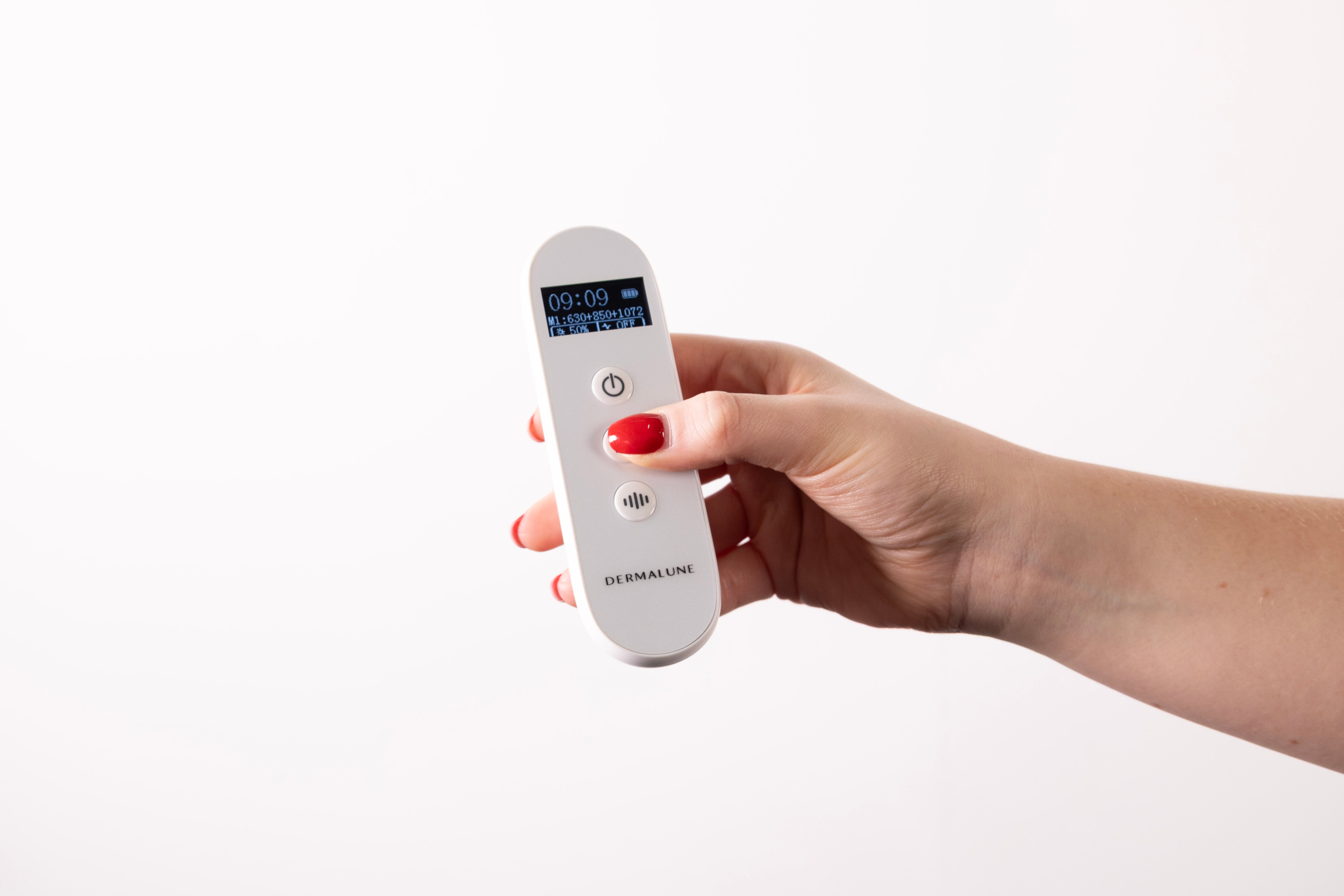
Beyond wavelength and irradiance, the temporal pattern of light delivery plays a meaningful role in photobiomodulation outcomes. Dermalune incorporates both continuous and pulsed wave modes, allowing light to be delivered either as a steady signal or in defined intervals.
Continuous wave delivery provides stable, uninterrupted stimulation. This mode supports sustained mitochondrial activation, energy metabolism, and regenerative processes where consistent signaling is beneficial. Continuous delivery is commonly applied during recovery-focused phases, where tissue stability and ongoing cellular support are prioritized.
Pulsed wave delivery, by contrast, introduces periodic pauses in light exposure. This intermittent pattern can enhance cellular responsiveness, reduce adaptation, and influence signaling pathways involved in inflammation control and neuromodulation. Pulsed delivery is particularly relevant in contexts where modulation rather than sustained activation is desired.
Within the Dermalune system, wave mode selection functions as a delivery refinement tool, not as a separate treatment modality. Both modes operate within the same biological framework, allowing practitioners to adapt stimulation dynamics while maintaining controlled exposure and system consistency.
Graduated biological dosing
Intensity Levels
Biological response to photobiomodulation is dose-dependent. Skin tissue does not respond uniformly to a single level of stimulation, but adapts according to condition, sensitivity, and phase of recovery. For this reason, effective PBM systems require controlled variability in output rather than a fixed delivery level.
Dermalune operates with three predefined intensity levels, designed to support graduated biological stimulation within safe and predictable boundaries. These levels allow light exposure to be aligned with different biological states, such as acute post-treatment recovery, ongoing regenerative support, or maintenance, without altering the underlying wavelength architecture.
Lower intensity levels are suited to situations where tissue sensitivity or inflammatory activity is elevated, allowing biological processes to be supported without excessive stimulation. Higher intensity levels can be applied when greater photonic input is biologically appropriate, such as during regenerative phases where cellular energy demand and repair activity are increased.
By structuring intensity selection into defined levels rather than continuous manual adjustment, Dermalune maintains consistency and repeatability while still accommodating biological variability. Intensity control functions as a dosing mechanism, enabling light-based support to remain adaptive without becoming uncontrolled.
CLINICAL CONTEXT
Complementary Regenerative Support
In dermatological practice, regenerative outcomes are typically supported through a combination of procedural treatments and topical formulations. These approaches provide biochemical input at the skin surface and play a well-established role in professional care.
Photobiomodulation operates through a different biological dimension. Rather than introducing active compounds, controlled light exposure interacts with cellular processes by influencing energy metabolism and signalling pathways within tissue.
Because these mechanisms are distinct, light-based support does not replace topical strategies but complements them by addressing biological activity at a cellular level that is not dependent on molecular penetration.
Within clinical workflows, this allows PBM to function as a non-invasive support modality that integrates seamlessly alongside established procedures and topical regimens.